
Why we told the National Screening Committee it’s time for change
CMV Action recently submitted our response to the UK National Screening Committee’s (NSC) consultation on newborn screening for congenital cytomegalovirus (cCMV).
We wanted to share our response with you, our families and supporters, because it is shaped by something the report does not fully reflect: the lived experience of those affected by cCMV.
For more than 13 years now, CMV Action has supported pregnant women and families whose babies are diagnosed with cCMV. Many of our trustees and volunteers have personal experience of the virus, and our support team has heard thousands of stories of delayed diagnosis, missed treatment opportunities and long-lasting impact on families.
Despite advances in research and treatment, the experience for families today has changed very little.
Why our perspective matters
CMV Action is the only UK charity supporting families affected by cCMV. We…
This means we see, again and again, what happens when babies are not tested early.
The biggest problem: timing really matters for CMV
One of our main concerns is that the consultation’s plain English summary does not clearly explain the critical timelines that make CMV different from many other conditions.
These timelines are essential for parents responding to the consultation to understand:
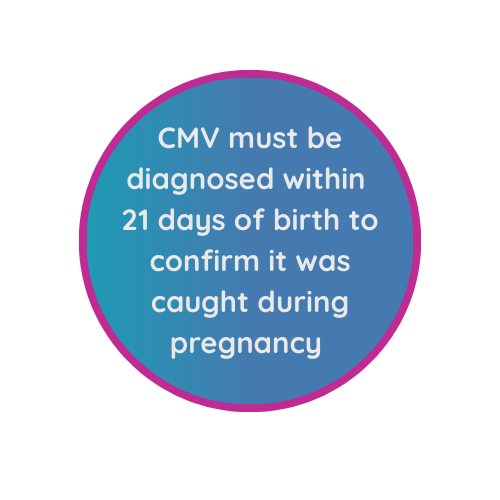
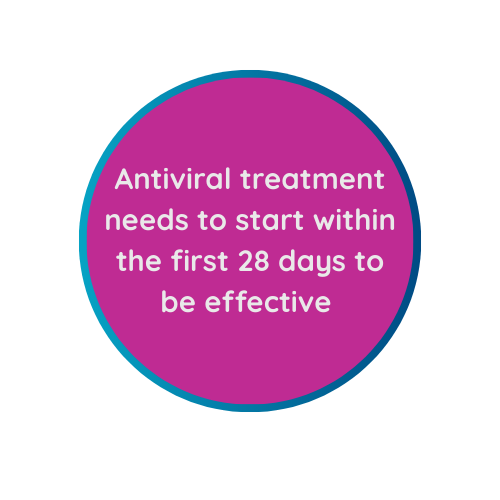
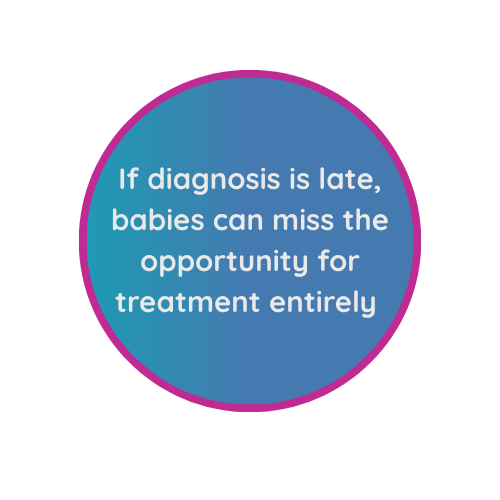
This information is not clearly explained in the summary, even though many parents and members of the public will rely on it rather than reading the full technical report.
Without this context, it is very difficult for families to give an informed response.
The true number of babies affected is likely higher
The report estimates that around 200 babies a year experience long-term problems caused by cCMV.
However, more recent research suggests this figure may be much higher. One large study estimates that around 900 babies a year in the UK could be affected by long-term outcomes.
Because most babies are not routinely tested, we simply do not know the true scale of the problem. This lack of data leads to under-recognition of how serious and widespread cCMV really is.
Predicting long-term problems doesn’t work without testing
The report suggests that long-term problems are best predicted by:
- Symptoms at birth
- Knowing when the mother was infected in pregnancy
- Brain scans (MRI or ultrasound)
But in reality:
- Many babies with symptoms are not tested, because CMV is not recognised
- Most pregnant women are not tested, so timing of infection is unknown
- Babies who are not tested do not receive scans, so a potential diagnosis is not missed
One study in Spain showed that around half of babies with cCMV have brain abnormalities that would never be found without testing. Without screening, these tools simply don’t work.
Universal vs targeted screening: families fall through the gaps
The report argues against universal screening partly because many babies identified may never develop symptoms. At the same time, it acknowledges that targeted screening (for example after a failed hearing test) misses babies without hearing loss.
From a family perspective, these positions contradict each other.
What we see instead is this:
- Babies without screening are not monitored
- Parental concerns are often dismissed
- Hearing loss and developmental problems are picked up late
Families are left asking “what if we’d known sooner?”
A diagnosis is not just about treatment, it is a gateway to monitoring, support and being taken seriously. Testing after the newborn hearing screen is not working.
Many parents assume that if their baby doesn’t pass the newborn hearing screen, CMV testing will happen quickly. In reality, this depends entirely on where the baby is born.
CMV Action carried out Freedom of Information requests across NHS trusts and found:
This postcode lottery means outcomes depend on location, not need.
The emotional toll on families is huge
Parents regularly tell us they feel:
‘Let down by the healthcare system’
‘Angry that concerns were dismissed’
‘Distressed by long, confusing diagnostic journeys’
‘Haunted by missed chances for treatment and support’
Research analysing previous NSC consultation responses described an “enduring sense of injustice” among families.
Families describe a CMV diagnosis as a “gateway”, without it, monitoring doesn’t happen and support is delayed or absent.
There are no real alternatives to screening
Screening is what families want, and studies show it is highly acceptable, with very low refusal rates.
If universal screening is not introduced immediately, every baby who fails the newborn hearing screen should be tested for CMV within the correct timeframe as an urgent minimum.
CMV costs families – and society – far more than screening
An economic analysis estimated the cost of congenital CMV to the UK at £732 million per year, even using conservative figures.
Since then, evidence shows that the cost of screening is minimal compared to the cost of lifelong disability, hearing loss, and lost opportunities.
Other countries have already moved ahead. The UK is falling behind.
Our message to the UK National Screening Committee
After 13 years of supporting families, we are deeply concerned that awareness of congenital CMV remains poor, diagnosis is still too often late, and access to treatment and monitoring is unequal across the country. Babies born today may not be better off than those born in 2012. This is inequitable, unfair, and harmful.
We urge the National Screening Committee to act with urgency, to properly fund and prioritise the research that is still missing, and to centre patient and family experience in decision-making. It is vital to commit to giving every baby the same chance, regardless of where they are born.
Families affected by cCMV deserve better, and they have waited long enough.
A copy of our full response is available on request, please email info@cmvaction.org.uk